|
|
|
|
|
|
|
|
|
|
|
|

|
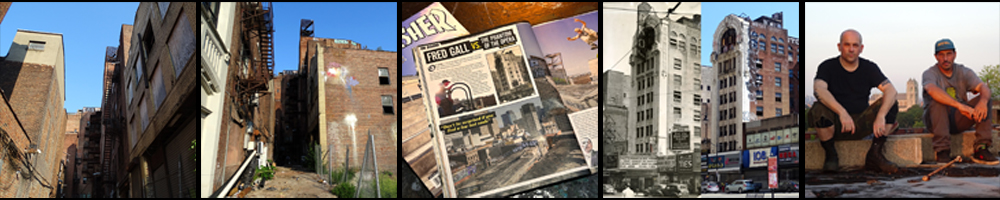

*please make sure video is set to 1080p
|
text version:
FRED GALL
|
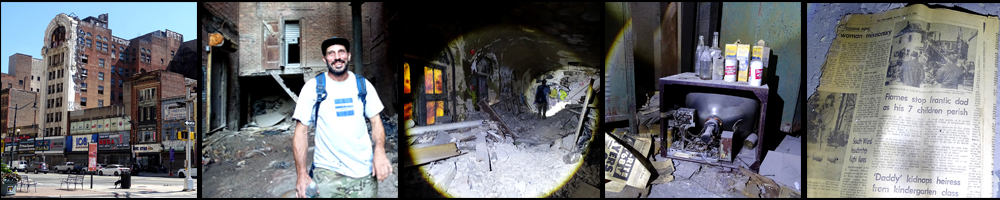
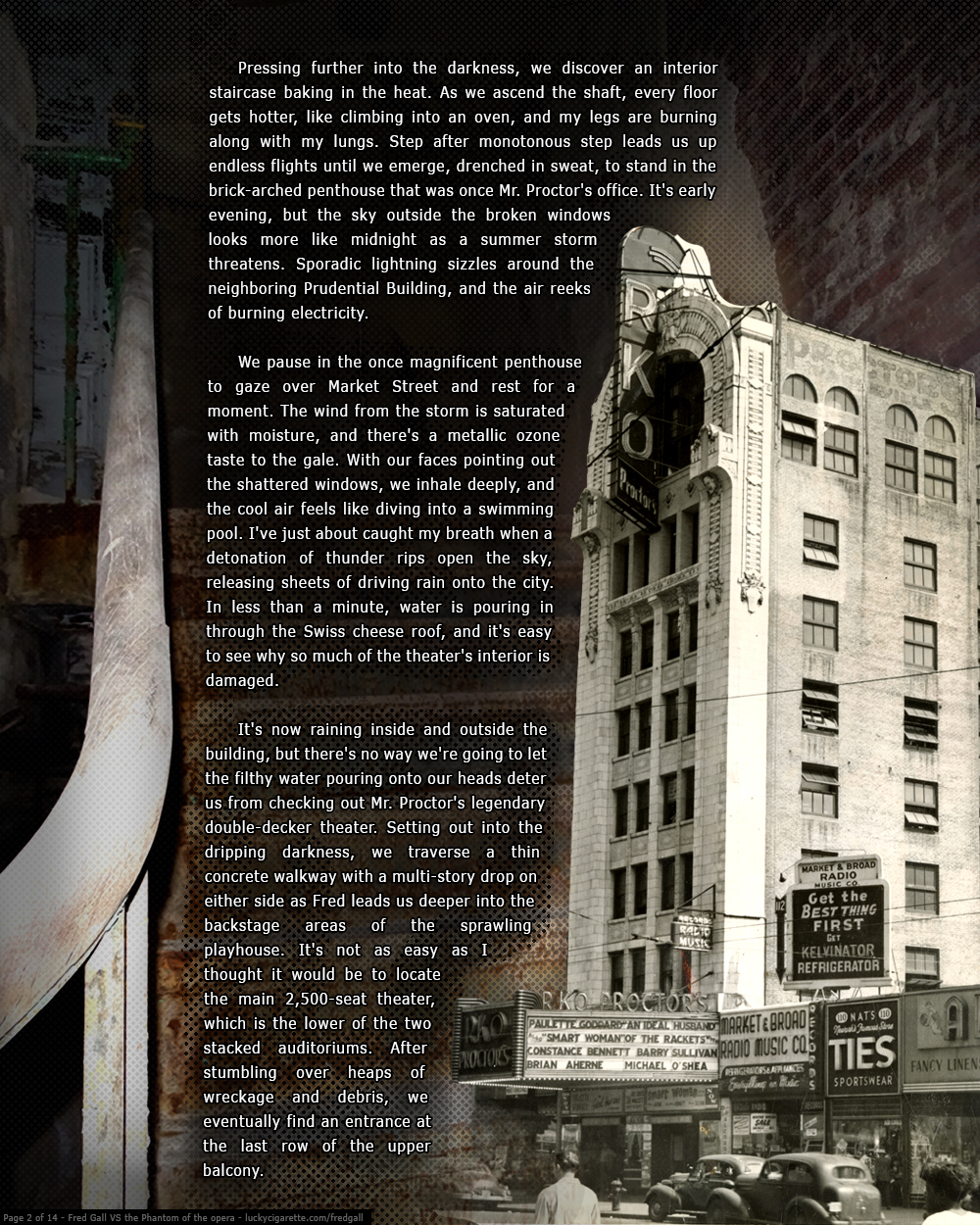
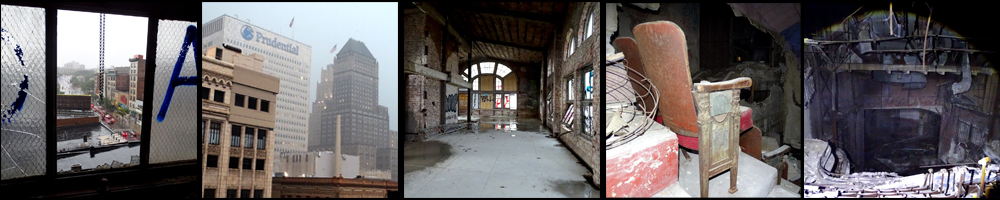
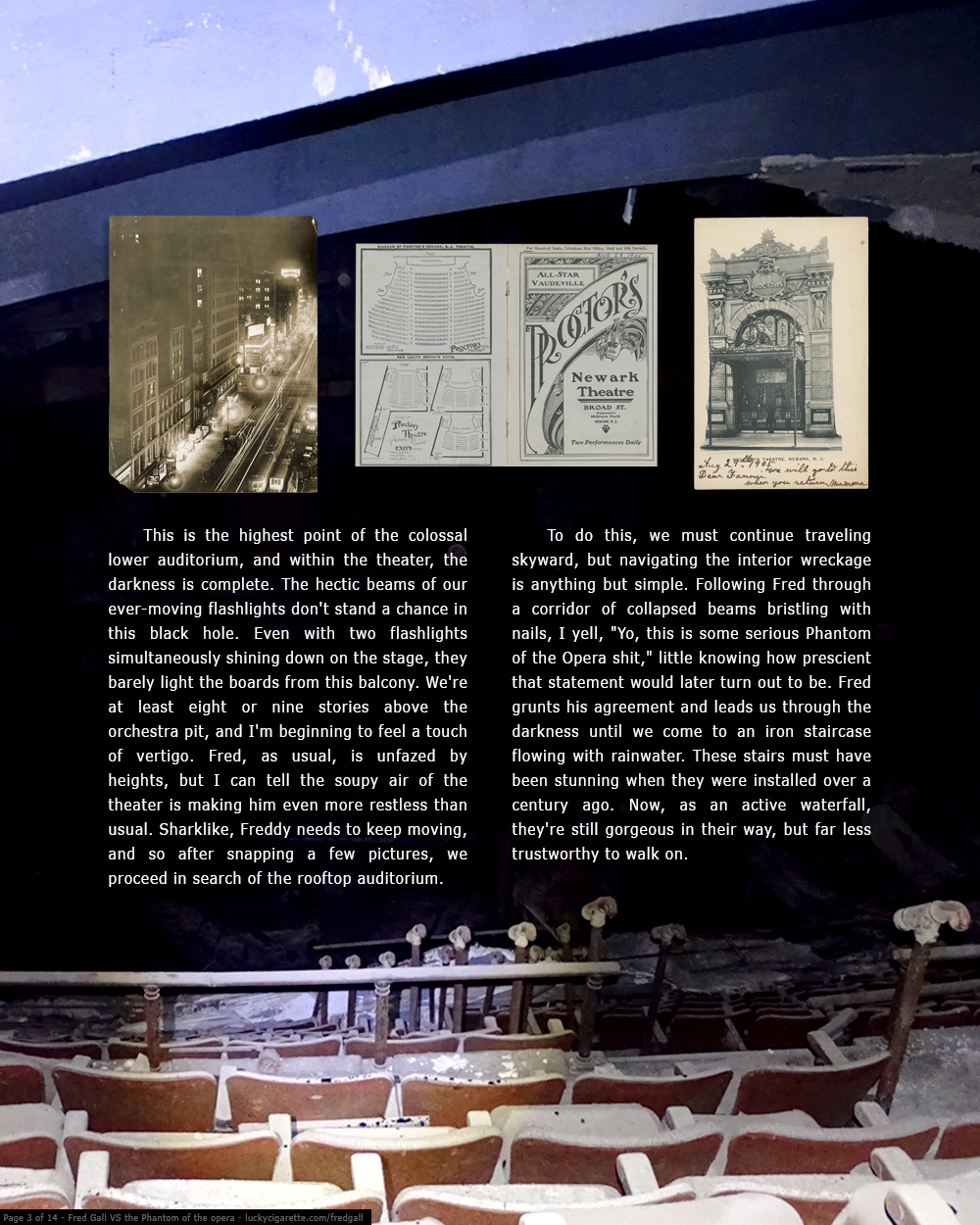
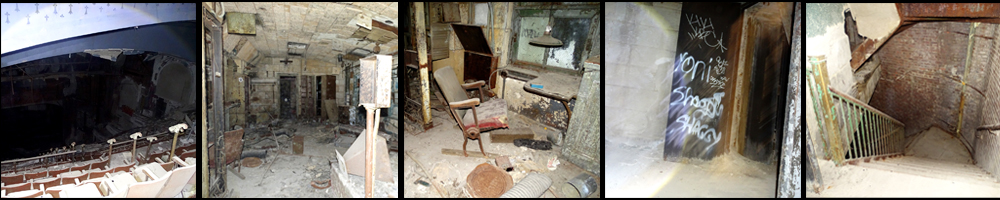
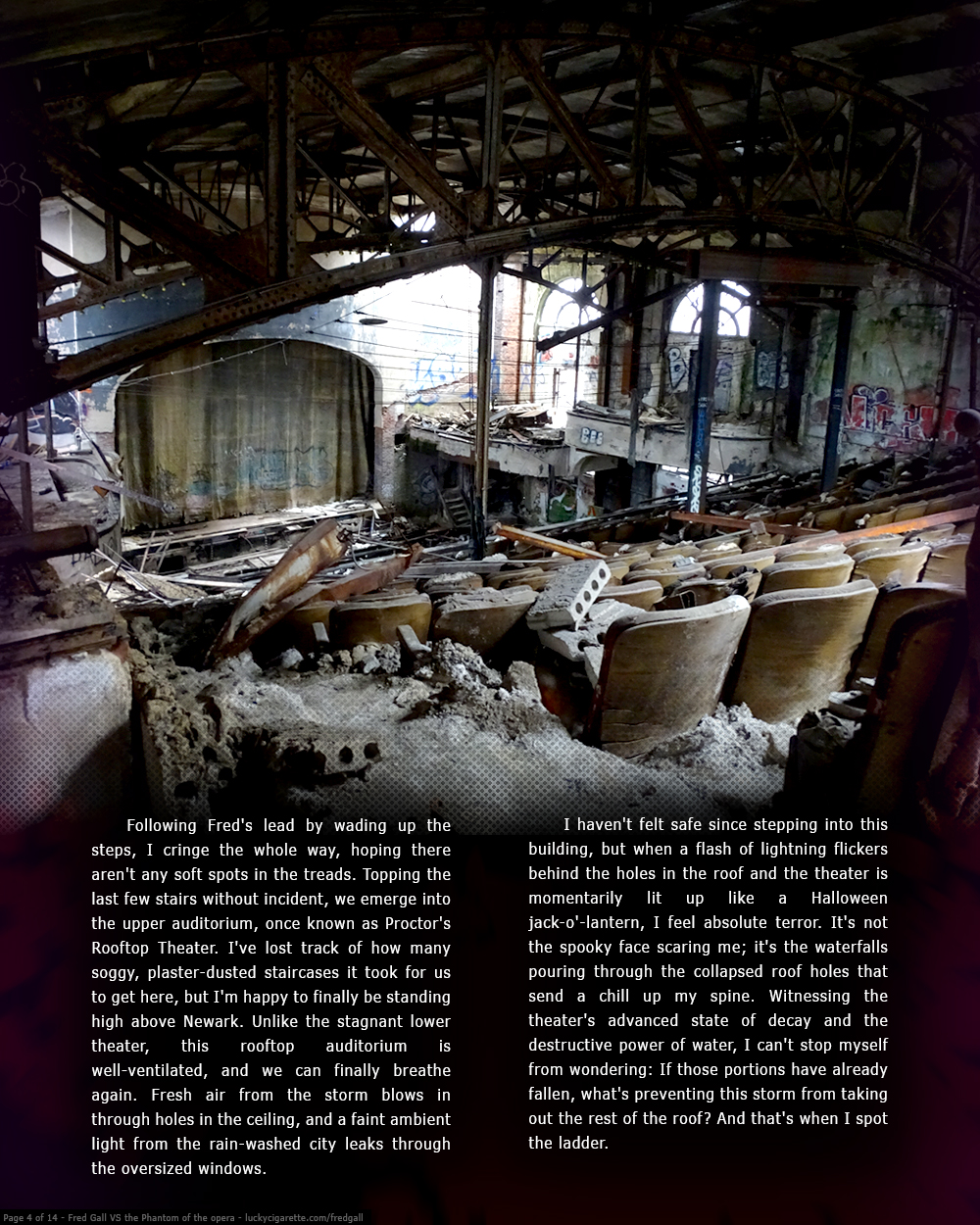
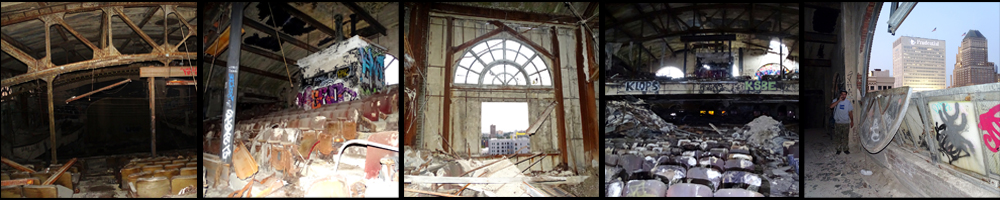
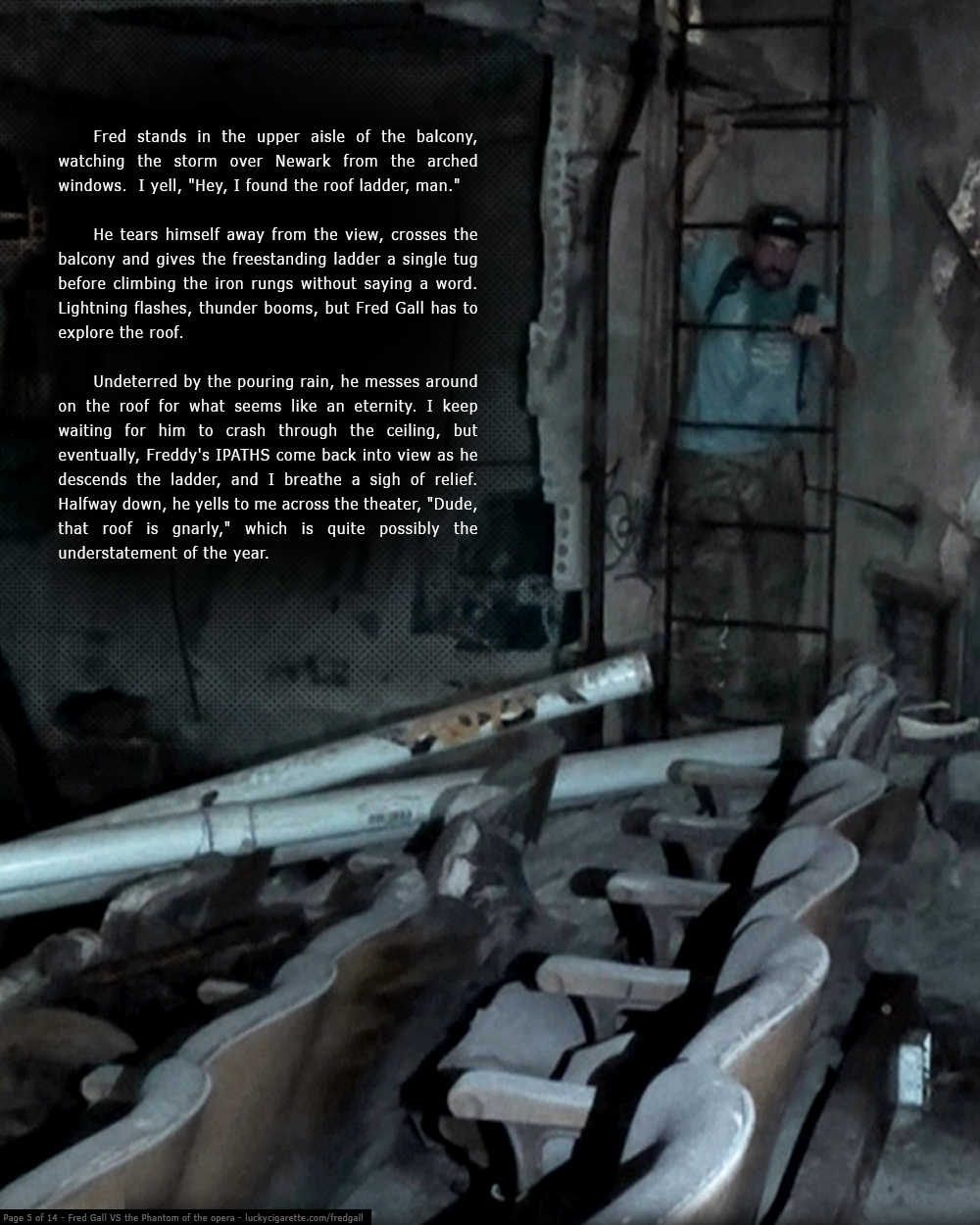
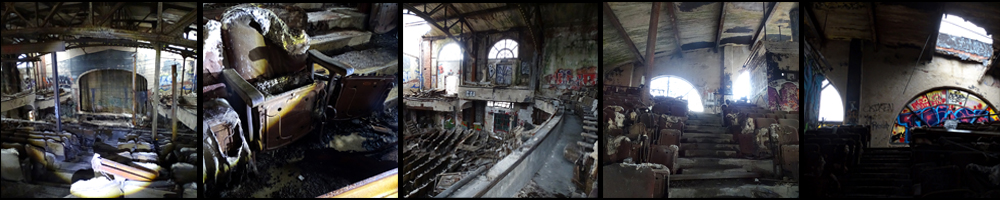
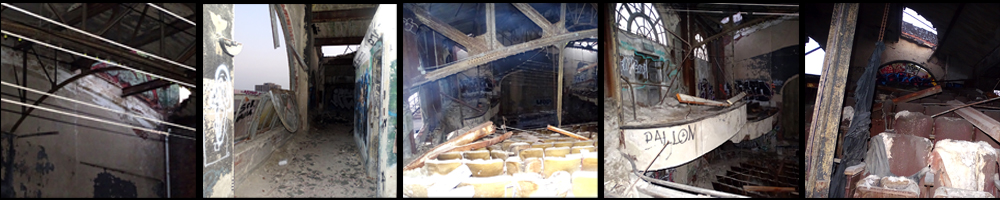
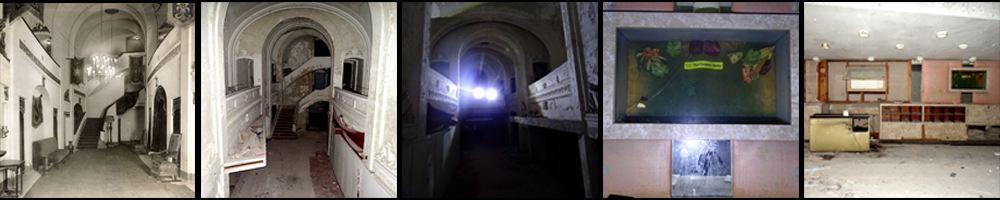
Fred Gall is a little nuts, and maybe I am too because I'm walking with him through the wreckage of a century-old abandoned theater in Newark, New Jersey. Once known as RKO Proctor's, this forsaken "entertainment palace" is now a graffiti-scarred derelict occupying an entire city block in the heart of the Downtown District. Six decades of abandonment have transformed the structure into an unstable, no-trespassing zone so perilous and sketchy that a person would have to be crazy to venture inside. Fred and I enter the theater through a jagged hole in a crumbling brick wall and find ourselves teetering over piles of rubble and plaster dust. Picking a pathway through the ruins, we explore a maze of boiler rooms, dressing chambers, and backstage areas with only our flashlights to light the way. Poking around in rooms that look like they haven't been disturbed for decades, Fred and I gawk at a Star Ledger newspaper from 1968 sitting next to timeworn cans of Rheingold Extra Dry Lager and long-empty bottles of TaB. Pressing further into the darkness, we discover an interior staircase baking in the heat. As we ascend the shaft, every floor gets hotter, like climbing into an oven, and my legs are burning along with my lungs. Step after monotonous step leads us up endless flights until we emerge, drenched in sweat, to stand in the brick-arched penthouse that was once Mr. Proctor's office. It's early evening, but the sky outside the broken windows looks more like midnight as a summer storm threatens. Sporadic lightning sizzles around the neighboring Prudential Building, and the air reeks of burning electricity. We pause in the once magnificent penthouse to gaze over Market Street and rest for a moment. The wind from the storm is saturated with moisture, and there's a metallic ozone taste to the gale. With our faces pointing out the shattered windows, we inhale deeply, and the cool air feels like diving into a swimming pool. I've just about caught my breath when a detonation of thunder rips open the sky, releasing sheets of driving rain onto the city. In less than a minute, water is pouring in through the Swiss cheese roof, and it's easy to see why so much of the theater's interior is damaged. It's now raining inside and outside the building, but there's no way we're going to let the filthy water pouring onto our heads deter us from checking out Mr. Proctor's legendary double-decker theater. Setting out into the dripping darkness, we traverse a thin concrete walkway with a multi-story drop on either side as Fred leads us deeper into the backstage areas of the sprawling playhouse. It's not as easy as I thought it would be to locate the main 2,500-seat theater, which is the lower of the two stacked auditoriums. After stumbling over heaps of wreckage and debris, we eventually find an entrance at the last row of the upper balcony. This is the highest point of the colossal lower auditorium, and within the theater, the darkness is complete. The hectic beams of our ever-moving flashlights don't stand a chance in this black hole. Even with two flashlights simultaneously shining down on the stage, they barely light the boards from this balcony. We're at least eight or nine stories above the orchestra pit, and I'm beginning to feel a touch of vertigo. Fred, as usual, is unfazed by heights, but I can tell the soupy air of the theater is making him even more restless than usual. Sharklike, Freddy needs to keep moving, and so after snapping a few pictures, we proceed in search of the rooftop auditorium. To do this, we must continue traveling skyward, but navigating the interior wreckage is anything but simple. Following Fred through a corridor of collapsed beams bristling with nails, I yell, "Yo, this is some serious Phantom of the Opera shit," little knowing how prescient that statement would later turn out to be. Fred grunts his agreement and continues to lead us through the darkness until we come to an iron staircase flowing with rainwater. These stairs must have been stunning when they were installed over a century ago. Now, as an active waterfall, they're still gorgeous in their way, but far less trustworthy to walk on. Following Fred's lead by wading up the steps, I cringe the whole way, hoping there aren't any soft spots in the treads. Topping the last few stairs without incident, we emerge into the upper auditorium, once known as Proctor's Rooftop Theater. I've lost track of how many soggy, plaster-dusted staircases it took for us to get here, but I'm happy to finally be standing high above Newark. Unlike the stagnant lower theater, this rooftop auditorium is well-ventilated, and we can finally breathe again. Fresh air from the storm blows in through holes in the ceiling, and a faint ambient light from the rain-washed city leaks through the oversized windows. I haven't felt safe since stepping into this building, but when a flash of lightning flickers behind the holes in the roof and the theater is momentarily lit up like a Halloween jack-o'-lantern, I feel absolute terror. It's not the spooky face scaring me; it's the waterfalls pouring through the collapsed roof holes that send a chill up my spine. Witnessing the theater's advanced state of decay and the destructive power of water, I can't stop myself from wondering: If those portions have already fallen, what's preventing this storm from taking out the rest of the roof? And that's when I spot the ladder. Fred stands in the upper aisle of the balcony, watching the storm over Newark from the arched windows. I yell, "Hey, I found the roof ladder, man." He tears himself away from the view, crosses the balcony and gives the freestanding ladder a single tug before climbing the iron rungs without saying a word. Lightning flashes, thunder booms, but Fred Gall has to explore the roof. Undeterred by the pouring rain, he messes around on the roof for what seems like an eternity. I keep waiting for him to crash through the ceiling, but eventually, Freddy's IPATHS come back into view as he descends the ladder, and I breathe a sigh of relief. Halfway down, he yells to me across the theater, "Dude, that roof is gnarly," which is quite possibly the understatement of the year.
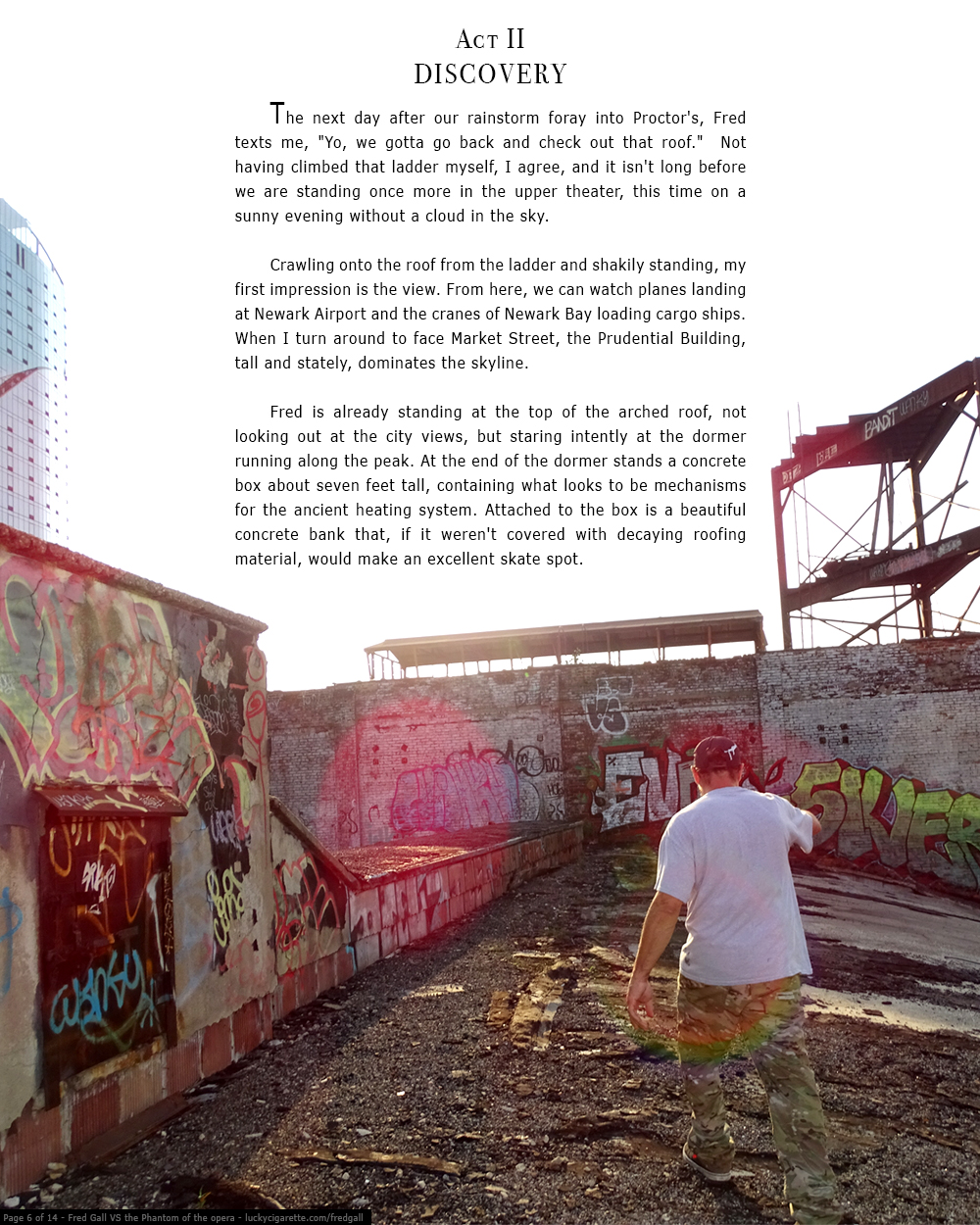
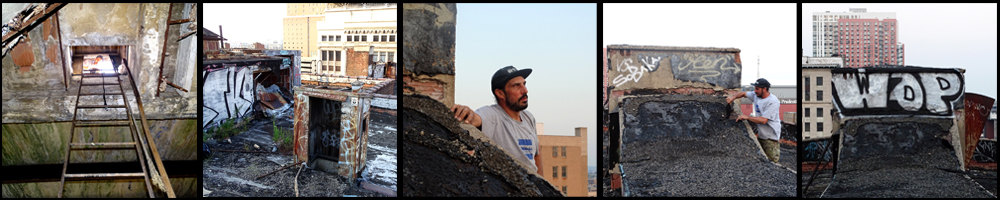
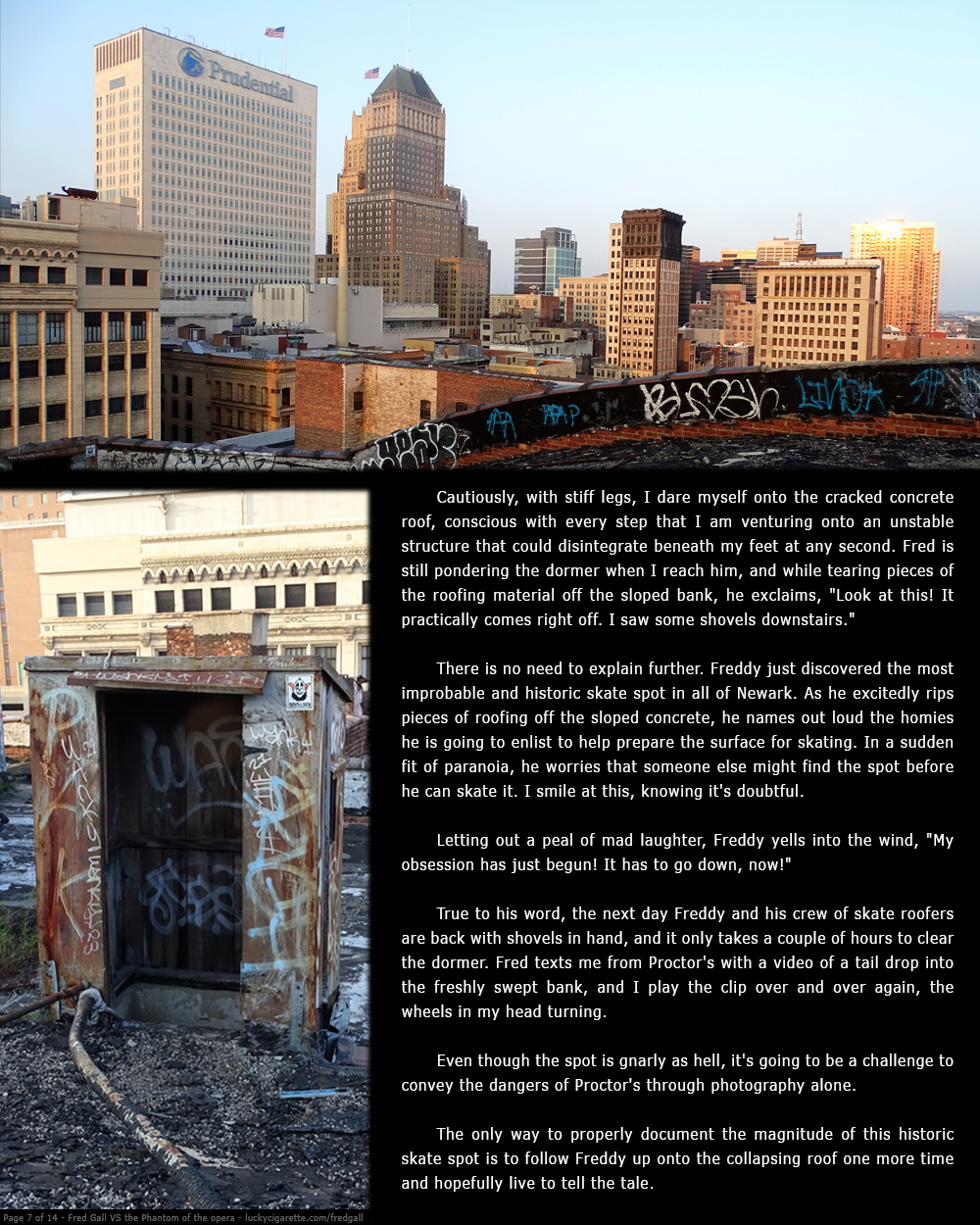
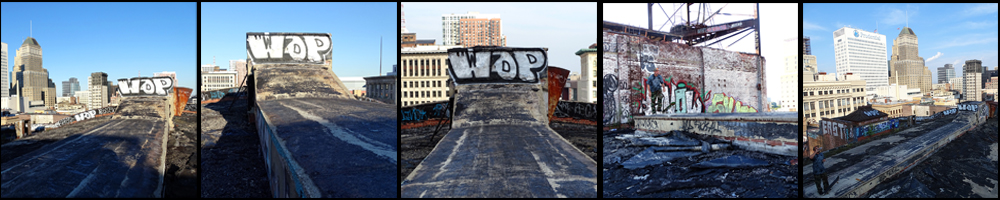
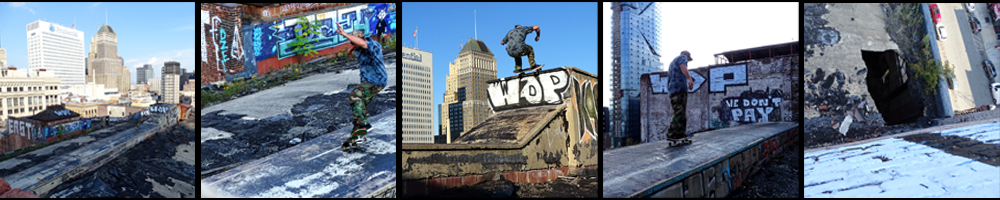
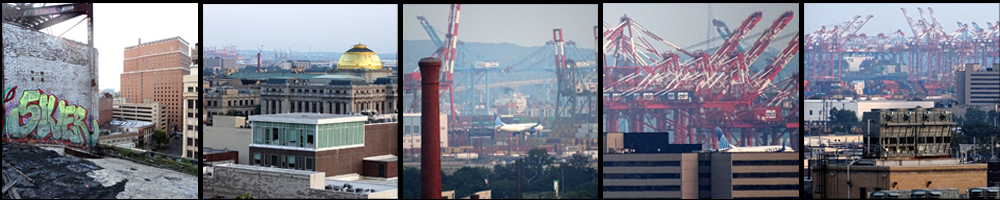
The next day after our rainstorm foray into Proctor's, Fred texts me and says, "Yo, we gotta go back and check out that roof." Not having climbed that ladder myself, I agree, and it isn't long before we are standing once more in the upper theater, this time on a sunny evening with not a cloud in the sky. Crawling onto the roof from the ladder and shakily standing, my first impression is the view. From here, we can watch planes landing at Newark Airport and the cranes of Newark Bay loading cargo ships. When I turn around to face Market Street, the Prudential Building, tall and stately, dominates the skyline. Fred is already standing at the top of the arched roof, not looking out at the city views, but staring intently at the dormer running along the peak. At the end of the dormer stands a concrete box about eight feet tall, containing what looks to be mechanisms for the ancient heating system. Attached to the box is a beautiful concrete bank that, if it weren't covered with decaying roofing material, would make an excellent skate spot. Cautiously, with stiff legs, I dare myself onto the cracked concrete roof, conscious with every step that I am venturing onto an unstable structure that could disintegrate beneath my feet at any second. Fred is still pondering the dormer when I reach him, and while tearing pieces of the roofing material off the sloped bank, he exclaims, "Look at this! It practically comes right off. I saw some shovels downstairs." There is no need to explain further. Perhaps in the end, it's always about skating for Freddy, and he just discovered the most improbable skate spot in all of Newark. As he excitedly rips pieces of roofing off the sloped concrete, he names out loud the homies he is going to enlist to help prepare the surface for skating. In a sudden fit of paranoia, he worries that someone else might find the spot before he can skate it. I smile at this, knowing it's doubtful. Letting out a peal of mad laughter, Freddy yells into the wind, "My obsession has just begun! It has to go down, now!" True to his word, the next day Freddy and his crew of skate roofers are back with shovels in hand, and it only takes a couple of hours to clear the dormer. Fred texts me from Proctor's with a video of a tail drop into the freshly swept bank, and I play the clip over and over again, the wheels in my head turning. Even though the spot is gnarly as hell, it's going to be a challenge to convey the dangers of Proctor's through photography alone. The only way to properly document the magnitude of this historic skate spot is to follow Freddy up onto the collapsing roof one more time and hopefully live to tell the tale...
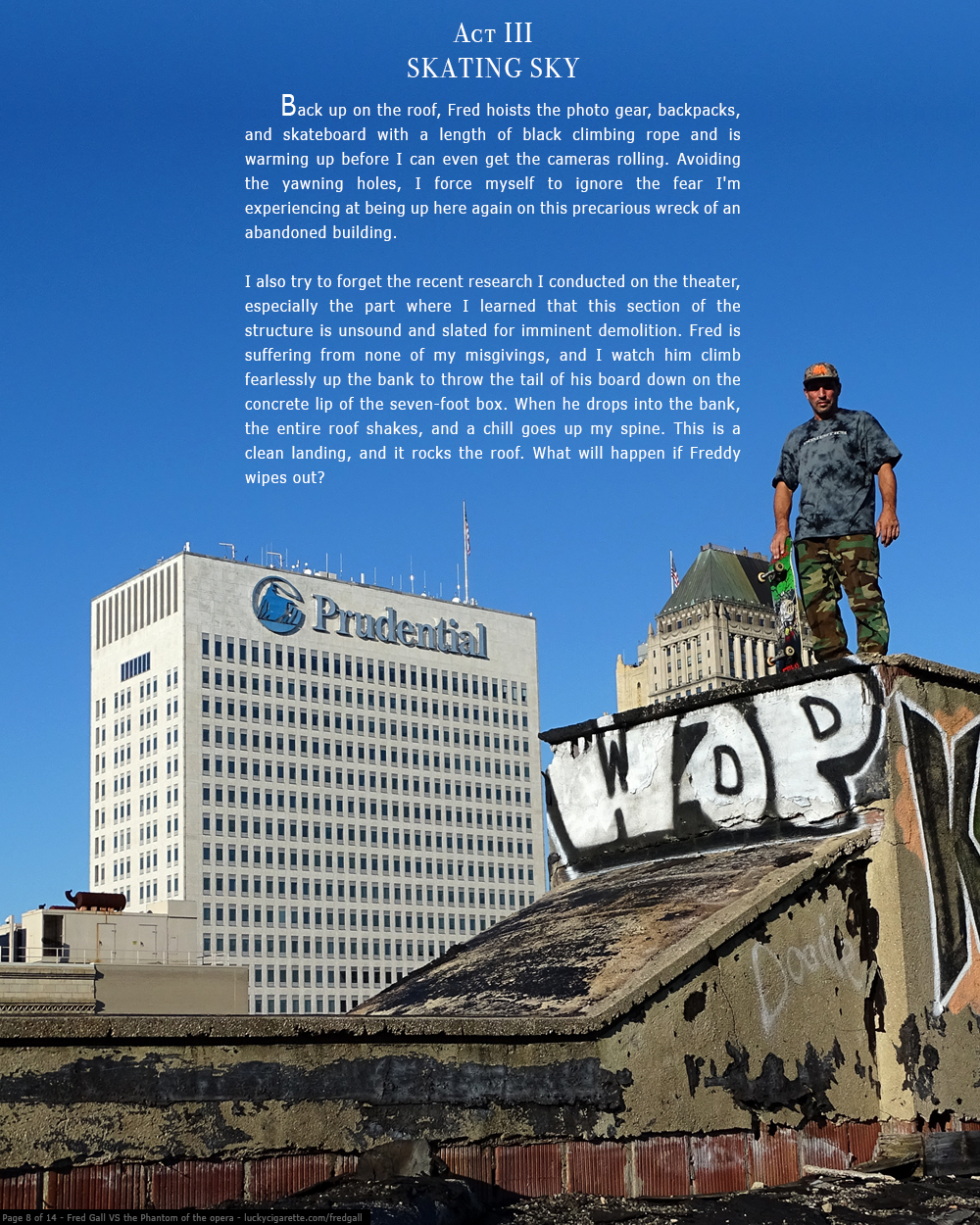
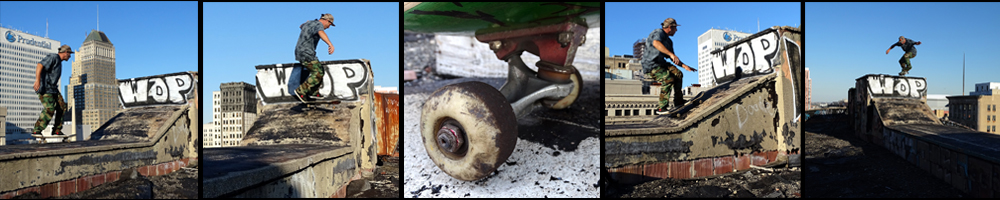
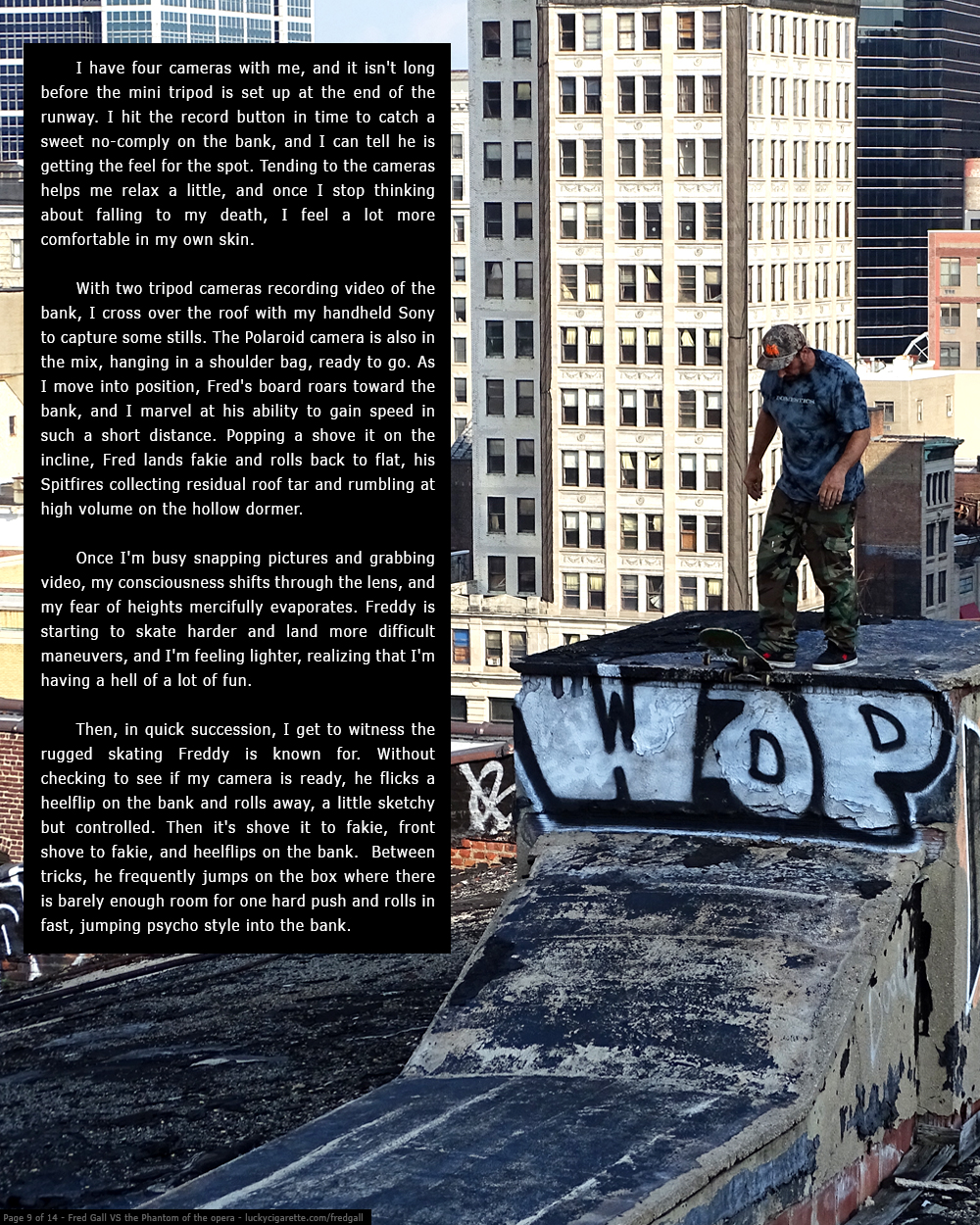
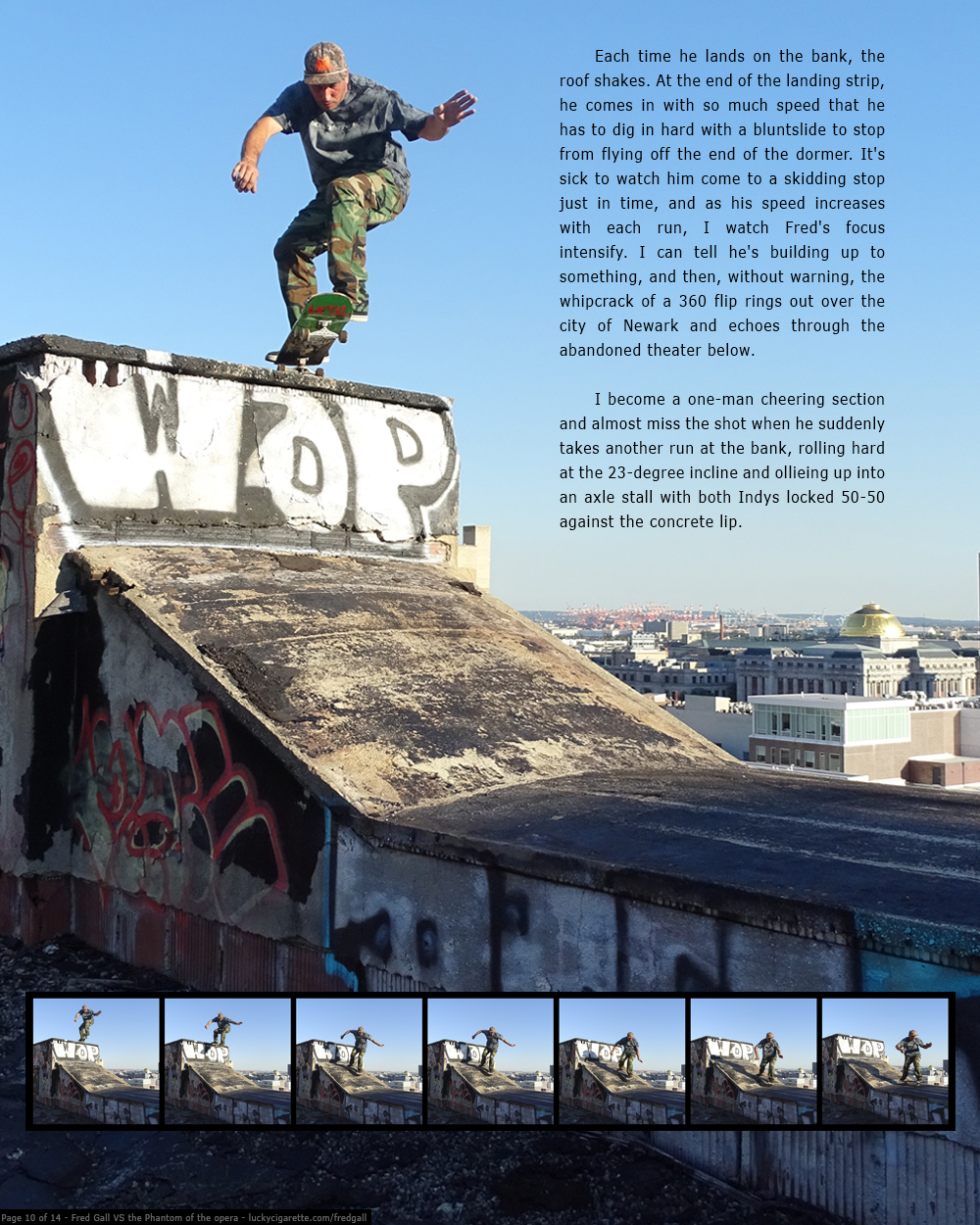
Back up on the roof, Fred hoists the photo gear, backpacks, and skateboard with a length of black climbing rope and is warming up before I can even get the cameras rolling. Avoiding the yawning holes, I force myself to ignore the fear I'm experiencing at being up here again on this precarious wreck of an abandoned building. I also try to forget the recent research I conducted on the theater, especially the part where I learned that this section of the structure is unsound and slated for imminent demolition. Fred is suffering from none of my misgivings, and I watch him climb fearlessly up the bank to throw the tail of his board down on the concrete lip of the eight-foot box. When he drops into the bank, the entire roof shakes, and a chill goes up my spine. This is a clean landing, and it rocks the roof. What will happen if Freddy wipes out? I have four cameras with me, and it isn't long before the mini tripod is set up at the end of the runway. I hit the record button in time to catch a sweet no-comply on the bank, and I can tell he is getting the feel for the spot. Tending to the cameras helps me relax a little, and once I stop thinking about falling to my death, I feel a lot more comfortable in my own skin. With two tripod cameras recording video of the bank, I cross over the roof with my handheld Sony to capture some stills. The Polaroid camera is also in the mix, hanging in a shoulder bag, ready to go. As I move into position, Fred's board roars toward the bank, and I marvel at his ability to gain speed in such a short distance. Popping a shove it on the incline, Fred lands fakie and rolls back to flat, his Spitfires collecting residual roof tar and rumbling at high volume on the hollow dormer. Once I'm busy snapping pictures and grabbing video, my consciousness shifts through the lens, and my fear of heights mercifully evaporates. Freddy is starting to skate harder and land more difficult maneuvers, and I'm feeling lighter, realizing that I'm having a hell of a lot of fun. Then, in quick succession, I get to witness the rugged skating Freddy is known for. Without checking to see if my camera is ready, he flicks a heelflip on the bank and rolls away, a little sketchy but controlled. Then it's shove it to fakie, front shove to fakie, and heelflips on the bank. Between tricks, he frequently jumps on the box where there is barely enough room for one hard push and rolls in fast, jumping psycho style into the bank. Each time he lands on the bank, the roof shakes. At the end of the landing strip, he comes in with so much speed that he has to dig in hard with a bluntslide to stop from flying off the end of the dormer. It's sick to watch him come to a skidding stop just in time, and as his speed increases with each run, I watch Fred's focus intensify. I can tell he's building up to something, and then, without warning, the whipcrack of a 360 flip rings out over the city of Newark and echoes through the abandoned theater below. I become a one-man cheering section and almost miss the shot when he suddenly takes another run at the bank, rolling hard at the 23-degree incline and ollieing up into an axle stall with both Indys locked 50-50 against the concrete lip.
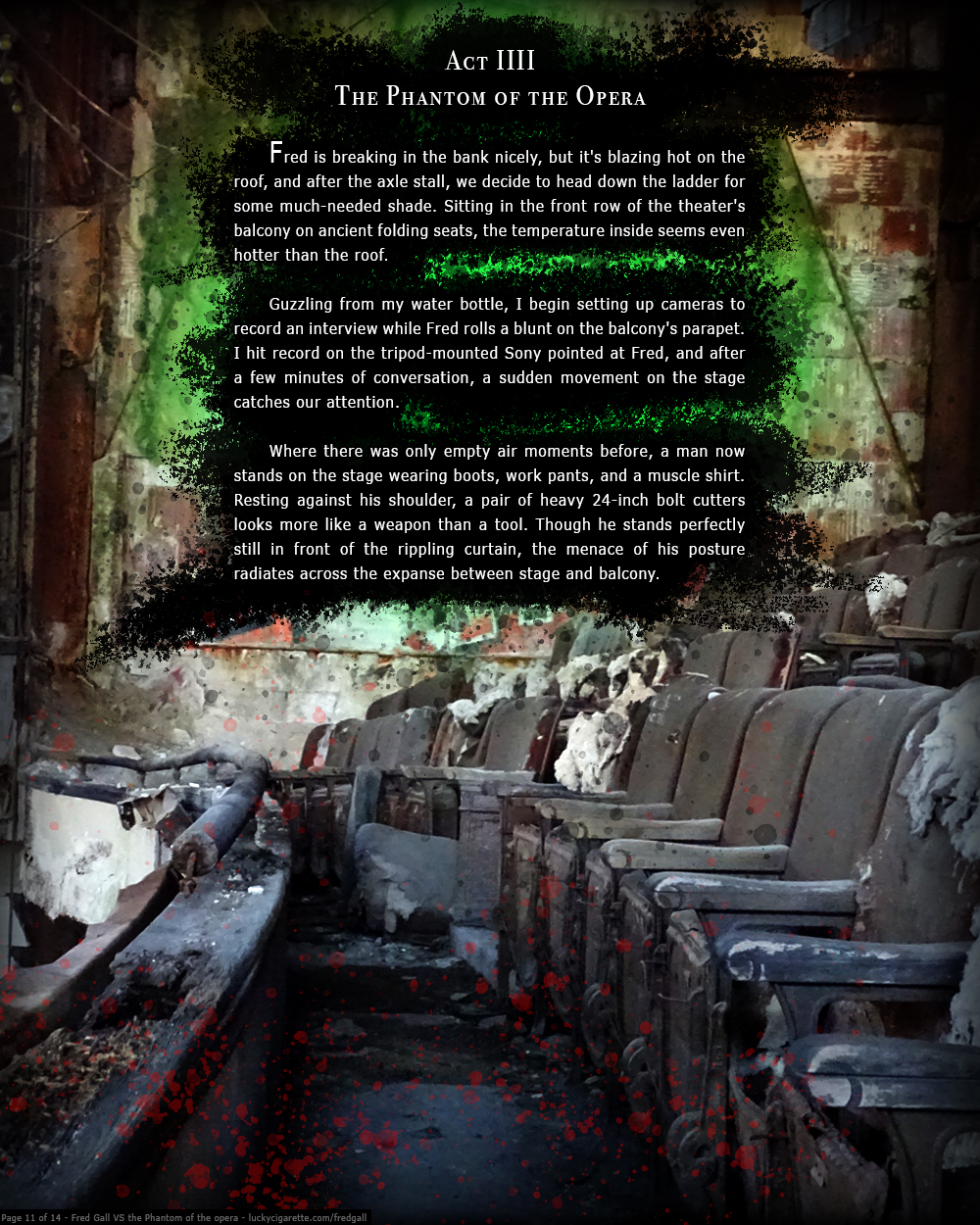
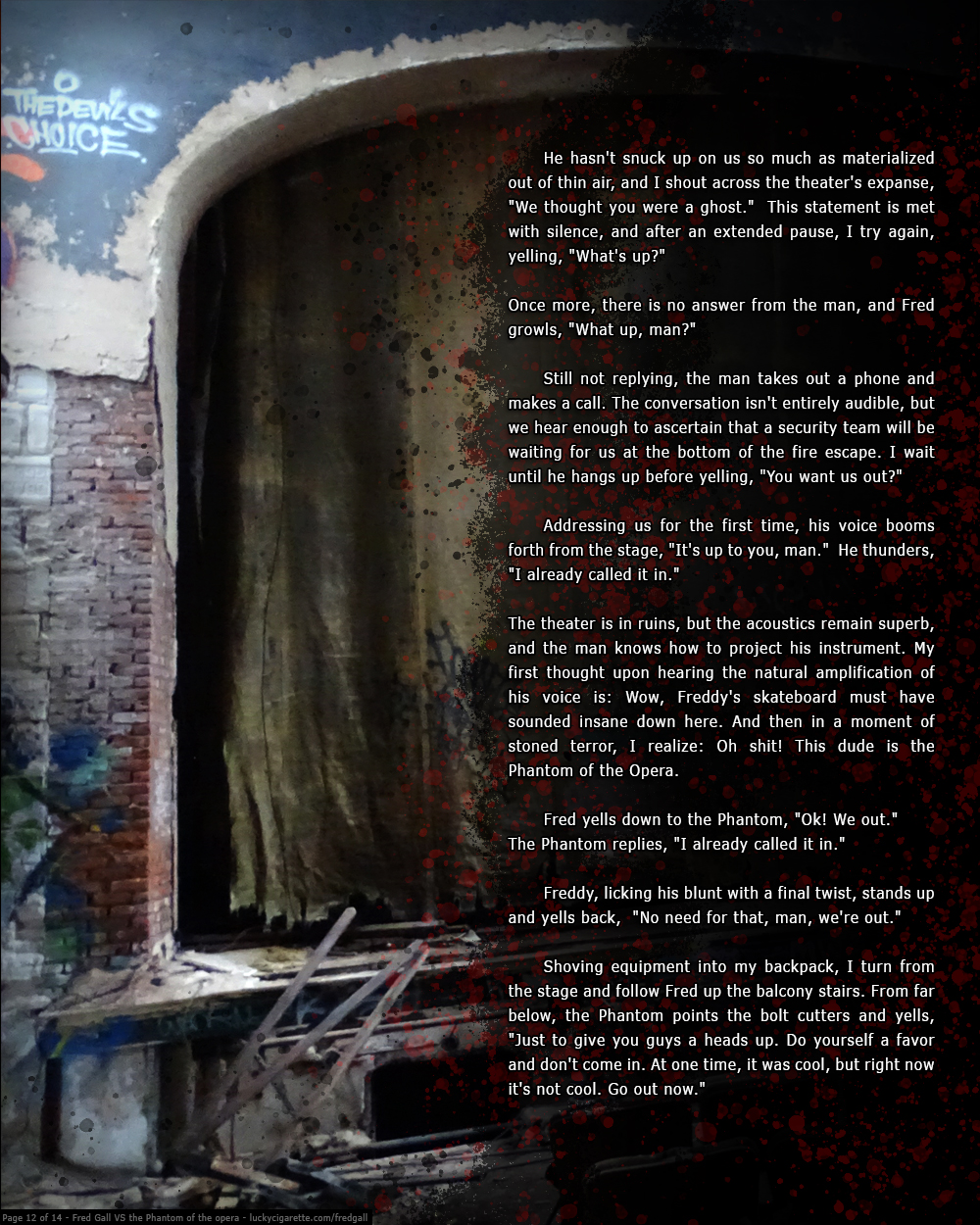
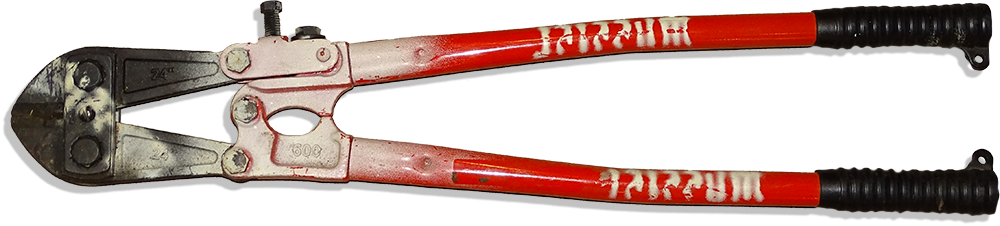
Fred is breaking in the bank nicely, but it's blazing hot on the roof, and after the axle stall, we decide to head down the ladder for some much-needed shade. Sitting in the front row of the theater's balcony on ancient folding seats, the temperature inside seems even hotter than the roof. Guzzling from my water bottle, I begin setting up cameras to record an interview while Fred rolls a blunt on the balcony's parapet. I hit record on the tripod-mounted Sony pointed at Fred, and after a few minutes of conversation, a sudden movement on the stage catches our attention. Where there was only empty air moments before, a man now stands on the stage wearing boots, work pants, and a muscle shirt. Resting against his shoulder, a pair of heavy 24-inch bolt cutters looks more like a weapon than a tool. Though he stands perfectly still in front of the rippling curtain, the menace of his posture radiates across the expanse between stage and balcony. He hasn't snuck up on us so much as materialized out of thin air, and I shout across the theater's expanse, "We thought you were a ghost." This statement is met with silence, and after an extended pause, I try again, yelling, "What's up?" Once more, there is no answer from the man, and Fred growls, "What up, man?" Addressing us for the first time, his voice booms forth from the stage, "It's up to you, man." He thunders, "I already called it in." The theater is in ruins, but the acoustics remain superb, and the man knows how to project his instrument. My first thought upon hearing the natural amplification of his voice is: Wow, Freddy's skateboard must have sounded insane down here. And then in a moment of stoned terror, I realize: Oh shit! This dude is the Phantom of the Opera. Fred yells down to the Phantom, "Ok! We out." The Phantom replies, "I already called it in." Freddy, licking his blunt with a final twist, stands up and yells back, "No need for that, man, we're out." Shoving equipment into my backpack, I turn from the stage and follow Fred up the balcony stairs. From far below, the Phantom points the bolt cutters and yells, "Just to give you guys a heads up. Do yourself a favor and don't come in. At one time, it was cool, but right now it's not cool. Go out now." Assuring him we're leaving, we head toward the stairs, but he disapproves of the direction we're taking. Jumping off the stage and running up the aisle, he intercepts Fred going down the iron staircase and blocks his exit. Fred tries to protest, but the Phantom repeatedly yells in his face, "Don't talk to me, go! Don't talk to me, go!" Catching up with Fred as he is being forced back up the stairs, we join forces and walk back down to face the Phantom together. We are still attempting diplomacy, but the Phantom is becoming increasingly agitated and impatient. Fred is also becoming overheated and frustrated with the exchange, and he yells, "Yo, you're puttin' the pressure on, like get the fuck out." This outburst enrages the Phantom, and he bellows, "YOU'RE NOT SUPPOSED TO BE IN HERE," while swinging the bolt cutters in the air like a battle axe. I feel the wind from the heavy tool as the business end whizzes past my face, and Fred and I are forced backwards up the stairs. I clutch the tripod in my left hand while warding off bolt cutters with my right, while the Phantom shouts in my face, "Go back up! Go back up!" Topping the stairs with the Phantom close behind, we find ourselves cornered. A standoff is imminent, but just when I think there is going to be a fight to the death, the Phantom of the Opera inexplicably shifts his tone. Adopting a false note of manipulative friendliness, he leaves his post at the top of the stairs and walks into the wreckage of the theater. Beckoning for us to follow him to the fire escape, he says, "Come. Come follow me. I'm not worried about you guys because I have backup downstairs. Come this way." Fred looks at me, shaking his head, and asks, "Do you want to go that way?" I answer them both, shouting, "Bro, we're just gonna go this way, man. We know the way." The Phantom stands amongst the balcony seats of the ruined theater and roars, "In here, bro." I yell back, "We're gonna go this way." Fred shouts, "We ain't takin the fire escape." With the Phantom no longer blocking our exit, Fred and I dip into the stairwell and, switching on my light, we book down the steps. Behind us, the Phantom's bestial rage echoes at our heels, "I tell you what," he roars, "I better not see you in here anymore." Fred stops to say something back, and I yell, "Come on, Freddy," as we continue our descent into the lower reaches of the theater. Many flights of stairs later, we pop out the same jagged hole we originally entered and, after ducking through a gap in the fence, emerge safely onto the sidewalk. As we suspected, there is no security team waiting for us, and Fred and I casually saunter away without opposition. After parting with Fred, the adrenaline is still pumping, and my mind keeps going back to the abandoned theater. On the drive home, I relive the experience over and over again, always returning to the moment when the whistling bolt cutters swing past my nose in the darkness.
|